
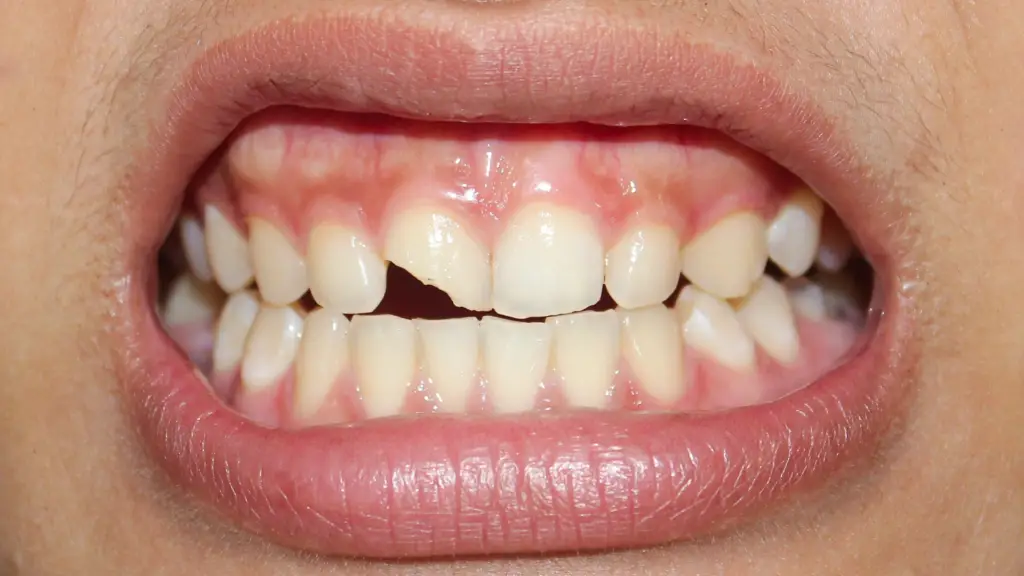
A chipped or cracked tooth should be assessed promptly, especially when there is pain, sensitivity, bleeding, swelling or a sharp edge. A knocked-out permanent tooth is more urgent: handle it by the crown, keep it moist and get to a dentist immediately because the chance of saving the tooth is time-sensitive.
First aid can protect the tooth on the way to the dentist, but only a dental examination can show how deeply a fracture or injury extends. The dentist needs to determine whether the pulp, root, supporting bone or neighbouring teeth have also been affected.
Chipped, Cracked or Knocked-Out Tooth: Which Is Most Urgent?
These injuries are not interchangeable, and the urgency depends on the type and severity of the damage.
A small enamel chip without pain is very different from a deep crack that hurts when you bite. Both are different again from a permanent tooth that has been completely knocked out.
A chipped tooth means part of the tooth has broken away. The damage may be limited to enamel or may extend deeper.
A cracked tooth can remain in one piece even though a fracture has developed through part of its structure. Some cracks are difficult to judge simply by looking in a mirror.
A knocked-out tooth, also called an avulsed tooth, has been completely displaced from its socket. A knocked-out permanent tooth requires immediate attention.
The American Association of Endodontists advises prompt examination after dental trauma because neighbouring teeth may also sustain injuries that are not immediately obvious.
What to Do Immediately After Chipping or Breaking a Tooth
Rinse your mouth gently, protect the area and call a dentist.
The American Dental Association recommends rinsing with warm water after a cracked tooth and using a cold compress on the outside of the face if swelling is present.
If part of the tooth has broken away and you can find it, save the fragment and bring it with you.
Until the tooth is assessed:
- Avoid chewing on the injured side
- Use a cold compress externally if there is swelling
- Protect your tongue or cheek from sharp tooth edges
- Do not attempt to file or reshape the tooth yourself
- Do not put aspirin directly against the tooth or gum
- Tell the dental office exactly what happened when you call
The Canadian Dental Association recommends calling a dentist promptly for a chipped or broken tooth and bringing any pieces of the tooth if possible.
An emergency oral exam allows the dentist to determine whether the visible damage is superficial or part of a deeper injury. Dupont Dentalworks lists cracked teeth, broken teeth and trauma among the concerns for which it prioritizes emergency appointments and says it aims for same-day assessment whenever possible.
What to Do If a Permanent Tooth Is Knocked Out
A knocked-out permanent tooth is a true dental emergency, and speed matters.
The American Association of Endodontists recommends getting to a dentist or endodontist immediately and says the ideal timeframe is within approximately 30 minutes of the injury.
Follow these steps:
- Pick up the tooth by the crown. This is the portion normally visible in your mouth. Do not handle the root.
- If the tooth is dirty, rinse it gently with water. Do not scrub it or use soap, alcohol, peroxide or other chemicals.
- If it can be safely repositioned, the AAE advises returning the tooth to its socket promptly. Handle only the crown.
- If you cannot reposition it, keep the tooth moist. Milk or an appropriate tooth-preservation product can be used.
- Go to a dentist or endodontist immediately. Bring the tooth with you.
The tooth should not be allowed to dry out. These steps help protect cells on the root surface that are important when replantation is attempted.
Do not automatically use the same approach for a knocked-out baby tooth. If a child loses a primary tooth because of trauma, contact a dentist immediately and follow the instructions provided for that specific situation. The ADA distinguishes between management of primary and permanent teeth after an injury.
Even when more than 30 minutes has passed, seek dental care. The tooth, socket and surrounding teeth still require assessment.
When a Chipped or Cracked Tooth Needs Urgent Care
Pain, swelling, mobility, significant sensitivity and deeper fractures are reasons to seek prompt dental assessment.
Call a dentist when you notice:
- Significant or worsening pain
- Pain while biting or releasing your bite
- Strong sensitivity to hot or cold
- A large missing section of tooth
- Bleeding around the injured area
- Gum, cheek or facial swelling
- A loose or displaced tooth
- A crack that appears to extend toward the gum
- Tooth darkening following an impact
- An injury affecting several teeth
Pain severity does not reliably reveal how deeply a fracture extends. The AAE advises dental assessment after traumatic injuries even when the visible damage appears minor.
Some situations extend beyond an isolated dental emergency. Seek emergency medical attention for suspected jaw fracture, uncontrolled bleeding, difficulty breathing, loss of consciousness or significant head and facial injuries. The ADA advises hospital emergency assessment when a broken jaw is suspected.
How a Dentist Determines Whether the Tooth Can Be Saved
The decision depends on how much healthy tooth remains and whether the pulp, root and supporting structures can be predictably treated.
Assessment generally begins with a clinical examination. Dental X-rays or other imaging may also be recommended depending on the nature of the injury.
The dentist may assess:
- How much tooth structure has been lost
- Whether the fracture reaches below the gum line
- Whether the tooth is loose or displaced
- Sensitivity to temperature and pressure
- The condition of the dental pulp
- The tooth root and surrounding bone
- Injuries to nearby teeth
- How the damaged tooth contacts the opposing teeth when biting
Treatment is determined by the depth and location of the injury rather than simply by how dramatic the tooth looks.
A small chip may sometimes be smoothed or restored with bonding or filling material. More extensive damage may require a crown.
If the pulp has been seriously injured or infected, endodontic treatment may be necessary to preserve the tooth. Dupont Dentalworks’ endodontic services specifically include treatment for chipped, displaced and knocked-out teeth.
Some fractures cannot be predictably restored. When a tooth cannot be saved, the dentist may discuss tooth extraction and appropriate replacement options.
When a Damaged Tooth May Need a Root Canal
A root canal may be required when trauma or a deep fracture seriously damages the dental pulp inside the tooth.
The pulp contains nerves, blood vessels and connective tissue. When it becomes irreversibly inflamed, infected or exposed by a significant fracture, endodontic treatment may be considered.
Signs that deserve assessment can include persistent pain, lingering temperature sensitivity, pain while chewing, swelling or symptoms that develop after an earlier injury.
Not every problem appears immediately. The AAE notes that injured teeth, particularly in children, may require follow-up monitoring so changes can be identified and treated when necessary.
During root canal therapy, damaged or infected tissue is removed from inside the tooth, the internal space is cleaned and the tooth is sealed. The remaining tooth structure is then restored as appropriate.
A root canal is not automatically required for every chipped or cracked tooth. The decision is based on the pulp, root, symptoms and restorability of the individual tooth.
When Can a Tooth Be Repaired and When Is Extraction Necessary?
Dentists generally aim to preserve a natural tooth when enough healthy structure and support remain for a predictable restoration.
Depending on the damage, treatment could involve bonding, a filling, a crown, root canal therapy or a combination of procedures.
Extraction becomes more likely when a fracture extends too deeply through the root, the tooth is split into separate sections, severe decay leaves insufficient healthy structure or the supporting tissues cannot provide adequate support.
When extraction is required, treatment planning should include the future of the space rather than ending with removal of the tooth.
Depending on the patient’s age, health, bone levels, location of the missing tooth and treatment goals, replacement could involve a bridge, removable dental prosthesis or dental implant. Dupont Dentalworks provides implant-based replacement for patients who have lost teeth.
The preferred treatment is the least extensive option that can predictably restore comfort, function and long-term dental health.
What Happens During an Emergency Dental Exam?
The first priorities are diagnosis, pain management and stabilizing the injured area.
Tell the dentist:
- What happened
- When it happened
- Where you were hit
- Whether the tooth moved
- Whether any tooth fragments were lost
- When pain or sensitivity started
- Whether there was loss of consciousness or another head injury
Bring any tooth fragment or knocked-out tooth with you.
Also tell the office about medications, allergies and relevant medical conditions.
Depending on the injury, the first visit may involve smoothing a sharp edge, placing a temporary or permanent restoration, repositioning or stabilizing a tooth, beginning endodontic treatment or discussing extraction when repair is not possible.
Traumatic injuries can require follow-up even when the tooth initially feels better. Changes involving pulp health, root development, mobility or surrounding tissues may emerge later, which is why the recommended follow-up schedule matters.
How to Reduce the Risk of Another Dental Injury
Not every broken tooth can be prevented, but several common risks can be reduced.
The ADA recommends wearing a mouthguard during sports and recreational activities where dental trauma may occur. It also advises avoiding chewing ice, hard candy and popcorn kernels and using scissors rather than teeth to cut materials.
Your teeth should not be used to:
- Open packaging
- Tear plastic
- Cut fishing line
- Hold tools
- Crack hard objects
If you regularly clench or grind your teeth, mention it to your dentist. Repeated heavy forces may contribute to wear or fractures, particularly in teeth that already contain large restorations.
Do Not Wait for a Damaged Tooth to Become More Painful
A chipped or cracked tooth may be relatively simple to repair, but appearance and pain alone cannot tell you how deeply the damage extends.
A knocked-out permanent tooth is even more time-sensitive. Handle the tooth carefully, keep it moist and seek dental care immediately.
For other injuries, call the dental office and describe exactly what happened. Prompt assessment gives the dentist a better opportunity to identify hidden problems, relieve discomfort and determine whether the tooth can be repaired or saved.
Dupont Dentalworks prioritizes emergency dental examinations and aims to see patients the same day whenever possible.
Frequently Asked Questions
Can I go to sleep with a cracked tooth and call the dentist in the morning?
That depends on the severity of the injury and your symptoms, so contact a dental office or appropriate urgent-care provider for guidance rather than relying on pain alone. Severe pain, significant swelling, uncontrolled bleeding, facial trauma or a loose or displaced tooth may require more immediate assessment.
Can a dentist repair a tooth fragment that broke off?
Sometimes a tooth fragment can help the dentist assess the injury and may be useful in treatment depending on the circumstances. The Canadian Dental Association recommends bringing any pieces of a chipped or broken tooth with you when possible.
Will a chipped tooth heal by itself?
No. Lost enamel or dentin does not simply grow back after a chip. A very small chip may require minimal treatment, but a dentist should determine whether the injury is superficial or extends into deeper tooth structure.
Should I go to a hospital or a dentist for a broken tooth?
A dentist is generally the appropriate first call for an isolated broken tooth, while significant facial or head trauma may require hospital assessment. Suspected jaw fracture, uncontrolled bleeding, breathing difficulty, loss of consciousness or serious facial injury should be treated as medical emergencies.