
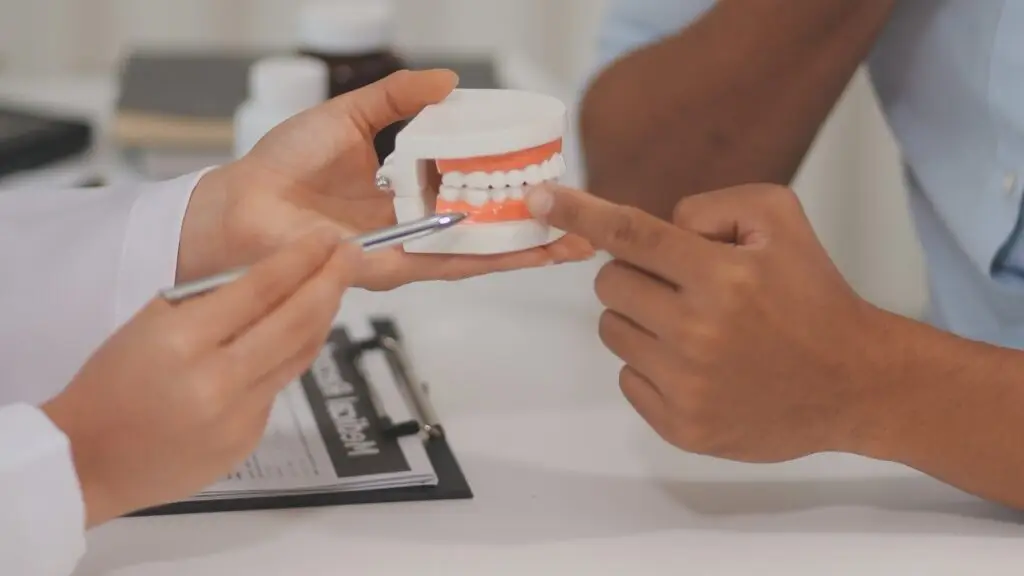
When comparing silver diamine fluoride vs. filling treatment, the two options solve different problems. Silver diamine fluoride, or SDF, can help arrest tooth decay in selected situations, while a filling removes damaged tooth structure and restores the tooth’s shape and function.
The right option depends on the tooth, the depth and location of the decay, symptoms, appearance, the patient’s ability to tolerate treatment, and the need for ongoing monitoring. A dental examination is needed before deciding which approach makes sense.
What Is Silver Diamine Fluoride?
Silver diamine fluoride is a liquid applied directly to a cavity to help stop the decay from progressing. Toronto Public Health describes SDF as a non-invasive treatment that can help stop cavities from growing and may reduce the need for more invasive treatment in appropriate cases.
SDF combines silver and fluoride. The silver component has antimicrobial activity, while fluoride supports the tooth structure. The treatment is applied topically and does not require drilling into the tooth during the SDF application itself.
SDF is part of a broader approach known as minimally invasive dentistry. The goal is to manage disease while preserving as much healthy tooth structure as possible. Dupont DentalWorks also discusses other minimally invasive approaches on its website, but the appropriate method depends on the individual tooth and patient.
Silver Diamine Fluoride vs. a Filling: What Is the Difference?
SDF and fillings solve different problems. SDF is a non-restorative treatment. Its purpose is to help arrest active decay. It does not remove the damaged area or rebuild a missing part of the tooth.
A filling is a restorative treatment. The dentist removes affected tooth structure as needed and places a restorative material to repair the area, rebuild shape and help the tooth function normally.
That distinction matters. A cavity can sometimes be stabilized without immediately restoring the tooth, but a tooth that has lost structure may still need a filling or another restoration even if the decay can be controlled.
A dentist may also use SDF as part of a staged plan. In that situation, the immediate goal is to control decay, with restoration considered later if the tooth requires it. Current professional guidance recognizes SDF as a non-restorative treatment that still requires diagnosis and monitoring.
When Might SDF Be Considered for a Cavity?
SDF may be considered when the dentist determines that arresting decay is an appropriate goal and the tooth can be monitored.
Professional guidance recognizes SDF as a minimally invasive caries-management option for selected primary and permanent teeth. It can be particularly useful when conventional restorative care is difficult at that moment or when a patient would benefit from a less invasive first step.
Possible considerations include:
- a cavity that is suitable for non-restorative management
- a young patient who has difficulty tolerating a longer restorative appointment
- a patient with significant dental anxiety
- a situation where treatment is being staged
- multiple areas of decay that cannot all be restored at one appointment
- a patient who needs a conservative approach because of individual medical, behavioural or access considerations
These are examples, not a checklist. The dentist still needs to assess the tooth, symptoms, remaining structure and overall oral health. For patients who find dental treatment difficult, minimal sedation with nitrous oxide may also be discussed when appropriate. Sedation and SDF address different needs.
When Is a Filling More Appropriate?
A filling is more appropriate when the tooth needs to be physically restored, not simply monitored for arrested decay. If decay has created a defect that affects the tooth’s shape, chewing surface, contact with the neighbouring tooth or structural strength, a restoration may be needed. A filling can remove compromised tissue as appropriate and rebuild the damaged area.
Symptoms also matter. Persistent pain, swelling, drainage or signs that decay may be approaching or involving the pulp require prompt assessment. SDF should not be viewed as a way to postpone diagnosis when a tooth may need more extensive care.
SDF used for caries management requires diagnosis, an individual treatment plan, informed consent and follow-up monitoring. It also emphasizes that SDF is a non-restorative treatment, which is why the condition of the tooth determines whether arresting decay is enough.
If you have been told you have a cavity but are not sure what the recommendation means, an oral examination gives the dentist an opportunity to explain what they see and why a specific treatment is being suggested.
Why Does SDF Turn a Cavity Black?
The most visible drawback of SDF is that decayed tooth structure can turn dark or black after treatment. Toronto Public Health advises patients that SDF stains cavities black while healthy tooth structure is not stained in the same way. This cosmetic change is important to discuss before treatment, particularly when the cavity is on a front tooth or another highly visible area.
For a back tooth, a patient or parent may decide that dark staining is an acceptable trade-off for a less invasive approach. For a front tooth, appearance may carry more weight in the decision. The staining should be discussed before SDF is applied.
Can Children and Adults Receive Silver Diamine Fluoride?
SDF is not limited to children. Much of the public discussion around SDF focuses on young children because avoiding or delaying drilling can be especially useful when a child has difficulty tolerating restorative treatment. Pediatric dental guidance supports SDF as part of an individualized caries-management plan.
Adults may also be candidates in selected situations. Canada’s current CDCP Dental Benefits Guide includes SDF within its topical caries-arrest treatment category across age groups, which reflects its broader clinical use.
Age alone does not determine suitability. The dentist needs to consider the type of lesion, symptoms, location, restorability, patient preferences and ability to return for monitoring.
Parents who are building a child’s preventive routine may also find Dupont DentalWorks’ guide to a child’s first dental visit useful for understanding how early dental visits support prevention and monitoring.
Does SDF Mean You Will Never Need a Filling?
No. SDF can help arrest selected cavities, but it does not guarantee that a filling, crown or other treatment will never be needed. The tooth needs to be reassessed. Some lesions may remain arrested with monitoring and repeat application when recommended. Other teeth may eventually need restoration because of structure, function, appearance, progression or a change in symptoms.
This is why follow-up is part of SDF treatment rather than an optional extra. Toronto Public Health notes that multiple SDF applications may be required, and professional guidance stresses ongoing monitoring. Ask when the tooth will be rechecked, whether another SDF application is expected, and what would lead the dentist to recommend a filling instead.
How Does SDF Fit Into Preventive Dental Care?
SDF treats existing decay. It does not replace the habits and professional care that reduce the risk of new cavities.
Brushing with fluoride toothpaste, cleaning between the teeth, limiting frequent exposure to sugary foods and drinks, regular dental assessments and professional preventive care still matter. A professional dental cleaning also gives the dental team an opportunity to monitor changes in the mouth and reinforce an individualized home-care routine.
Patients with repeated cavities may need a broader conversation about why decay keeps developing. Diet, dry mouth, oral hygiene, fluoride exposure, existing dental work and medical factors can all influence caries risk. The useful question is not only, “Can this cavity be treated without drilling?” It is also, “What can we change to reduce the chance of another cavity developing?”
What Should You Ask Before Choosing SDF or a Filling?
A clear treatment discussion should explain the goal of each option.
Ask your dentist:
- Is the goal to arrest the decay, restore the tooth, or do both in stages?
- How deep is the cavity, and is there any concern about the nerve of the tooth?
- Will SDF leave a visible dark area?
- If we use SDF now, when will the tooth be reassessed?
- Could the tooth still need a filling later?
- What symptoms should prompt an earlier appointment?
- If a filling is recommended, what part of the tooth needs to be restored?
Frequently Asked Questions
Can Silver Diamine Fluoride stop a cavity without drilling?
SDF can help arrest selected cavities without drilling during the application itself. A dentist must first determine that non-restorative management is appropriate and then monitor the tooth after treatment.
Does SDF permanently turn the tooth black?
SDF can permanently darken the decayed part of a tooth, which is one of its main cosmetic limitations. The visibility depends on where the cavity is located, so appearance should be discussed before treatment.
Will my child eventually need a filling after SDF?
Possibly. Some treated cavities can remain arrested with monitoring, while others may later need a filling or another restoration because of structure, function, progression or appearance.
Can adults receive Silver Diamine Fluoride?
Yes, adults may be considered for SDF in appropriate situations. Suitability depends on the condition of the tooth and the treatment goal rather than age alone.
How does a dentist decide between SDF and a filling?
The decision is based on the cavity’s depth and location, symptoms, remaining tooth structure, caries activity, cosmetic concerns, patient preferences and ability to complete and maintain follow-up care. The dentist should explain what each option is intended to accomplish before treatment begins.

